Showing posts with label Kodak Ektar 100. Show all posts

Point and Shoot Pity Party Part 5: Pentax IQ Zoom 160

This is Part 5 of a recurring series on basic point and shoot consumer cameras, the details of which can be found here.

To be offered something for the cost of shipping is a tough thing to turn down, particularly when one has the tricky habit of adopting point and shoot cameras that few people want.  On a recent post of mine about my "Point and Shoot Pity Party," a kind reader offered to send me a few examples of point and shoot cameras languishing in his possession for the cost of shipping.  I got only a general idea of what was coming my way but thought the endeavor would certainly be fun.  Among the treasures in the box was the Pentax IQ Zoom 160, a late model mega-zoom P&S that was among the top tier among traditional point and shoots of its era.  I quickly took to this camera, and spoiled it on a Spring outing with some fresh Ektar film to see just what it might be able to do.  

Front View (open)

Top View (extended) - talk about overcompensating!

Through the decently sized viewfinder.  The bracket marks actually compress as you zoom out to assist in focusing. If you focus on a close object, the top of the viewfinder screen will grey out to assist with parallax correction.   

Name: Pentax IQ Zoom 160
Format: 35mm
Type: Autofocus Point and Shoot 
Year: 1999
Features: Fill Flash, Flash Off, Night Portrait, Bulb with and without flash, Self Timer, Remote Trigger, Multiple Exposure, Spot AF and Forced Infinity Focus, Backlit top LCD, Panorama Mask, Parallax Mask in VF, Red Eye Reduction Mode.
Lens: 35-160mm, f/4.5-12.0 (11 elements in 7 groups).
Battery: 1 CR-123 cell.
Manual: http://www.derrybryson.com/manuals/Pentax/35%20mm%20Point%20and%20Shoot/IQZoom160.pdf


Cost: $5.50 (the cost of shipping)
Cost When New (and adjusted): $269.00 ($390.00)
Where I found it: Sent to me by a kind site visitor for the cost of shipping.
Why I got it: I was asked if I was interested and I said "sure am!"

What film: Kodak Ektar 100.

What I liked: 
  • Main Dial Control.
  • Adjusting focal points in VF when zoomed. 
  • Parallax mask.
  • Comfortable in Hand
What I didn't like: 
  • Had to turn past flash settings to get to flash-off settings, a minor quibble.
  • Main dial had a tendency to flip on easily by accident.
  • No EV Compensation or Backlight feature. 
A shot taken in varied lighting rendered well on the Ektar film, which is known for being a bit less tolerant of exposure errors. 

Though one can't select focusing points, locking on a focal point at the center of the frame and recomposing the image was a snap with the Pentax.

In a shaded setting, the IQ Zoom did a decent job of getting an image with just enough exposure and contrast, but some sharpness was lost. 

Taken at the same time as the shot taken with the Aiborg, this result came out more or less looking much the same as those from the Official Camera of the Death Star.

A little fun with the multiple exposure option.  Decent, in a strange way. 

An attempt at using the zoom to full extent.  Even on a bright day, it was no match for 100 speed film with its f/12 minimum aperture. 

The camera does close subjects quite well, as seen here.  Admittedly, the bokeh, like that of the Aiborg, is somewhat disappointing. 

Again, the camera handles varied lighting in scenes pretty well. 
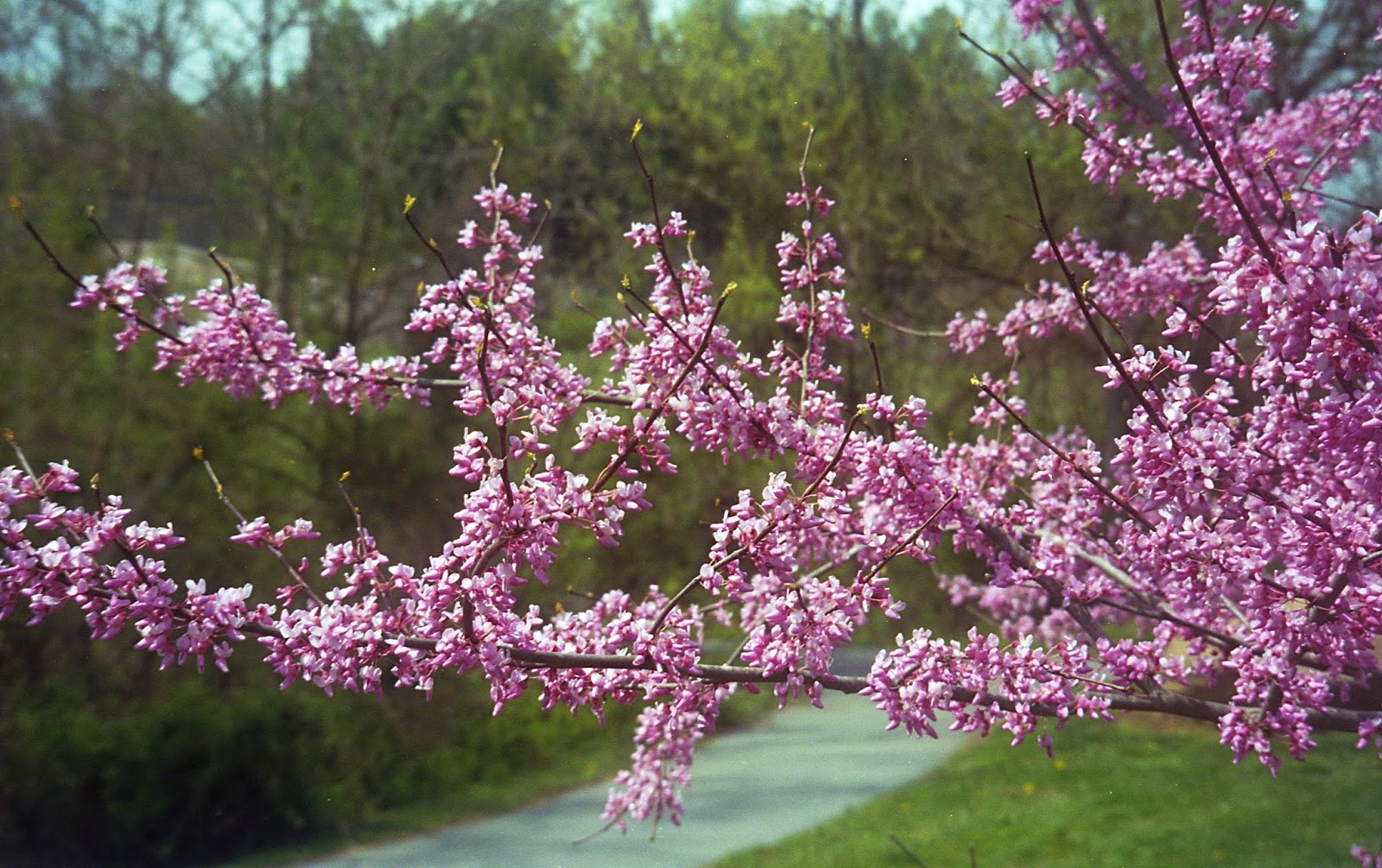
Another close subject shot.  It certainly nailed the focus on the desired subject despite the open holes that were invitations to focus in the distance.  

As with most super zoom cameras, the best image results still seem to come from the wide end of the focal range. 

A little bit of motion blur evident as I attempt a quick grab shot with the IQ Zoom. 

Back lighting was handled OK by the Pentax, but the lack of even an EV compensation or backlight feature seems the one loss in the vast feature set. 

Can't quite tell if the blur here is a by product of focus or motion, but suspect the latter. 

A decent result in somewhat harsh light, but still a hint of motion blur in the left hand. 

Some backlit results came out better than others.  I generally like this shot. 

Even modest action didn't seem to be well handled by the IQ Zoom.  

Overall, this was a particularly fun point and shoot to play with.  Abundant with features and seemingly ready for anything, the camera does put quite a lot in a compact package to tote along mostly anywhere.  The challenge is that a camera like this seems poorly suited for 100 speed film, even when shooting even the most basic movements in full sun, or when extending the zoom outward.  

I'm certainly not done with the IQ Zoom 160, but feel this may be a better camera for me to test a few rolls of 800 speed film I'm hanging on to, rather than getting decent shots only when I stick to sunny landscapes taken at the wide end of its vast focal range.  More to come!  

Ricoh Rarity: The 520M CDS Rangefinder

Rarity and value in the film camera collecting world can often have no seeming relationship.  One can head over to ebay and see a huge quantity of "rare" cameras for sale at the same time, and see people snapping them up at extreme prices.  And then there are those unknown models with truly small production runs that appear for sale only on rare occasion, and for a comparative song.  Witness the following:


Simply adorned but easily navigated, the Ricoh 520M CDS, occasionally seen as a model of the Sears 35RF, is an infrequently spotted example of mid-late 1960's rangefinder.

The camera model depicted here is Ricoh's 1966 vintage 520M CDS, and it is a surprisingly rare find on the film camera marketplace.  Head on over to eBay, Etsy, or Goodwill right now, and I can largely wager that you won't find one for sale. Heck, even searching the web for ANY mention of this camera model or its older sibling that lacks the "CDS" suffix will yield a pitifully modest bit of results.  As such this review for this rare camera that few seem to care much about is likely to sit about as the only formal review of this camera model on the web for some time, provided that late 1960's Japanese styling doesn't suddenly become the must have in late 2017, and the 520M CDS doesn't become the next big hipster thing.


I had the good fortune to randomly stumble across this listing at a point where I was interested in the many Ricoh rangefinder offerings in particular.  I nearly passed on the opportunity to snap up the eBay auction listing, but elected to jump in at opening bid as its closing time drew nearer and see what happened.  As it turns out, there was no sniper waiting for the chance to grab this camera, so it wound up being mine for under $25 once shipping was added in.

Though the main selling point of this model in 1966 was the CDS style meter, I've yet to get any sort of response from the meter despite using vinegar on the contacts and trying new batteries.  As such, this camera was quickly relegated for "Sunny-16" style shooting or situations where I might have a little bit of help to determine proper exposure.  


Unlike many cameras from earlier in the decade that often feature a dizzying amount of markings pertaining to LV values, the 520M has a clean and straight-forward interface.  Note that turning both aperture and shutter speed rings in the same direction won't keep a consistent exposure value.

Specs of the 520M CDS would best be described as fairly typical of the era in which it was produced.  The 48mm f/2 Rikenon features 6 elements in 5 groups, and while the shutter lacks the external markings of makers like Seikosha or Citizen often seen on earlier markings, it does have settings winding all the way down to 1 full second before the Bulb setting.  Later models often stopped at 1/15 or 1/30 as an economy measure.

Finding an accurate word to depict the look of the 520M CDS is a bit of a challenge, but this is largely a by-product of the era in which it was produced.  It lacks the stylish feeling of rangefinder models of the 1950's and earlier, but also lacks the sleek modernity and compactness of later models.  It is thus caught in a sort of purgatory between classic and modern that seems to embody neither of these qualities enough to categorize it, but actually has hints of both traits.

"Sexy" is not the first word that comes to mind when I gaze at the 520M CDS, but it is by no means an unattractive camera.  Having owned this camera for just over a year, I've come to realize that to me, this is not a "love at first sight" camera like many others, but rather a "slow burner" that grows on you with each use.  It has become the embodiment of "like before love" in classic camera form.  


The viewfinder of the 520M is fairly typical fare, with a usable but not phenomenal rangefinder patch.  Shame that the meter doesn't work in this example, as the match line metering is easily seen in the viewfinder. 

It is a camera that does nothing remarkably, but simply does everything well.  The rangefinder inlays well enough into the viewfinder to make focusing fairly easy in most situations.  The aperture and shutter speed settings are changed easily enough and are not linked together by a "light value" coupling common in the era, but often cumbersome to use. In fact, the order of the aperture and shutter speeds are reversed from typical "LV" type cameras, which admittedly makes changing values on the fly a bit slower than others. 

It seems that each season in which I plan out my color film usage, I begin to yearn to use this basic camera once again.  And each time I use it, it seems to behave perfectly, delivering crisp and well exposed images on each roll.  Despite a decent selection of sexier cameras to choose from, I keep coming back to use the 520M time and time again.  In some ways, it comes as a surprise as to how much I've used this camera, but given how straight-forward it is, it seems only natural to grab the 520M time and time again.

I first started shooting the 520M in the Spring of 2016, and found it to quite simply be an easily used and well made instrument that requires only a modest degree of confidence in one's exposure settings, and it would admirably do the rest.  The 520M fits in between the small form factor of smaller and larger rangefinders of the era, so it sits comfortably in the hands and has a nice weight to it that is not too bulky.

Results from the 520M were generally quite good in nearly all cases. though I've found that I tend to use this camera more at smaller apertures than others in my collection that I like to shoot wide open, but this seems more a situational coincidence rather than any dislike of shooting the camera on the wide open end.  Color rendering of the Rikenon lens is exceptional, which does tend to make it a favorite choice for fair weather shooting. 

Some shots on Fujicolor 200 show off the sharp definition and clear color rendition of the Rikenon lens.  This is a camera that works fantastically in bright scenes. 


Another scene taken closer up shows that the camera does close focus admirably.  The bright conditions and 1/500 minimum shutter speed didn't allow for a wider aperture shot to explore the bokeh of the lens. 


The Fujicolor was able to get a passable result from a very contrasty scene on this camera. 


The f/2 lens allows for decent indoor photography with fair sharpness from corner to corner. 


The decent size and weight of the 520M makes hand held photography in marginal light a distinct possibility.  There is some motion blur evident. 


Despite the reversing of the aperture and shutter speed rings to allow quick changes at the same time, it is still pretty easy to make a quick setting for exposure to focus and shoot, such as when one alights a train and wants to snag a photo. 


There are occasional glitches in the results from the 520M, as seen in the blur from this image. 


But then there are times when the camera does exactly as desired and leaves a result that is memorable. 


Even on Agfa Precisa CT in scenes of challenging light, the Ricoh did a good job of controlling contrast and rendering color nicely.

Under moderate overcast, the Rikenon lens gives fair but not delightful contrast on the Precisa film. 


Though this is not a scene rich for bokeh, the out-of-focus rendering of the 520M isn't the most spectacular from most observations. This was mostly taken to test the accuracy of the focusing mechanism and rangefinder.


In a scene that better represents bokeh, you can see that most out of focus areas don't yield saucers or swirls, but more a muted rendition.   To be fair though, the bright light means that the lens isn't wide open.

My guesses at Sunny 16 measures led to some overexposure here, but still a decent result. 


Again, a scene of measurable contrast yielded a decent result on transparency film. 

Focus was again dead on target from the rangefinder as I snapped this shot. 


A bit of light leakage shows up on a shot I had one chance to get. 


A hopeful try at a low light hand held shot comes out disappointingly. 

Uh, oh - frame overlap.  A very occasional issue on this sample. 

This Spring, I shot some Ektar 100 through the 520M and it started out by giving me some good results.

From what I've noticed, this camera does well with water renditions.

Shot under mixed light, the camera again performs well.

The 48mm lens sometimes leaves me wishing it was a bit wider, such as this closely cropped scene. 

Another well handled scene where the camera's focus was perfect upon the fountain. 

Shot at about f/4.  Focus is excellent, but the bokeh again is disappointing.  

More light leakage spoils an otherwise well rendered shot. 

Where the 520M excels is vivid scenes like this.  While most cameras do well in these situations, it seems the 520M delivers just a little something extra at smaller apertures. 

Again, varied light and a vivid result. 

Yet again, a great sunny day camera. 


In a very bright setting such as above and below, the scene was slightly overexposed, but still rendered well. 


The 520M doesn't respond especially well to hasty shots, as evidenced by the motion blur here. 

Not sure why this camera in particular just seems to handle mixed lighting so well. 

The recess of the Rikenon lens allows it to handle backlighting better than lenses lacking such protection. 

Another well handled scene with backlit conditions. 

The Rikenon loves color and the Ektar supports that love. 

Some processing issues with my home kit, but a decent view to close out the numerous examples in the write-up.

The Ricoh 520M CDS is by no means the best camera in my collection, nor is it the best rangefinder in my collection.  I have models with faster shutter speeds, wider apertures, and better rangefinder patches.  But while the 520M doesn't seem to excel at any one thing in particular, it does excel in being a straight-forward and easy to use model that I come back to time and time again for an enjoyable outing in film photography.  And when it comes down to it, what more could one ask for?